
You fixed the message. But it was too late.
Meta’s CTO admitted an “atrocious” job explaining the AI reorg, and promised to explain better. By then the reorg had already spoken.
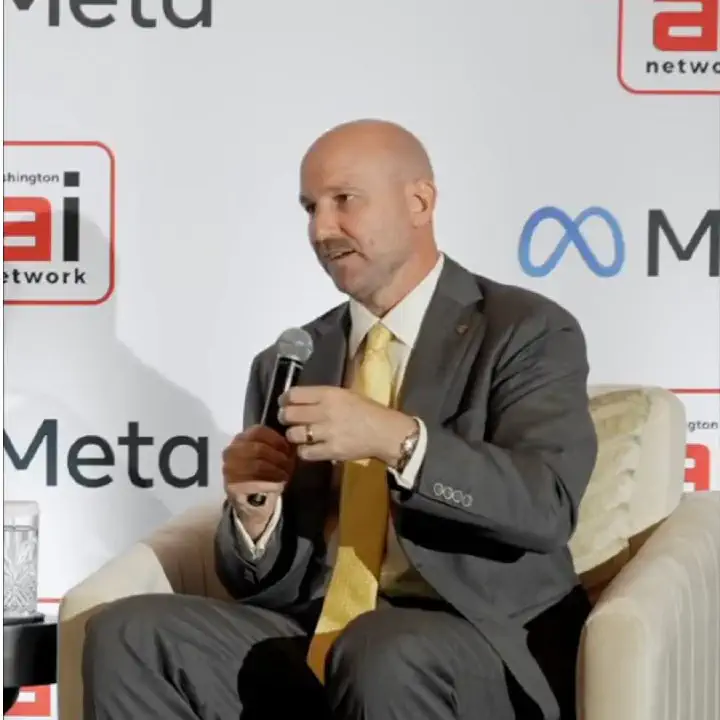
A few weeks ago Andrew Bosworth, Meta’s chief technology officer, wrote to his people and used the word “atrocious.”
He was not describing a competitor or the market. He was describing his own company, and the reorganisation he had just put thousands of engineers through to chase frontier AI.
The memo, reported by Wired, is unusually honest. Morale was near the lowest he had seen in twenty years at the company, close to the Cambridge Analytica days. He did not hide behind the passive voice. Meta did an atrocious job, he wrote, explaining the vision and supporting people through the change.
Then he said what he would do about it. More stability. Clearer communication. More transparency about why the strategy made sense. Some of the perks would come back.
Read that list again. A leader looks at a communication failure and reaches for more communication.
The reflex that built the gap
It is the most natural move in leadership. When the message did not land, explain it better. Say it again, with more context, so that this time people understand.
Bosworth is doing the honest version of this. He is not pretending the reorg went well. He is owning it, naming it, promising to fix the explaining. By the standard of most corporate memos this is rare. Few leaders ever get to “atrocious” about their own work.
But the cure he prescribes is the same instinct that produced the problem. Underneath it sits the assumption that people did not understand the vision, that if the why had been clearer, the reorg would have landed.
The reorg was the message
Here is what the engineers received. A reorganisation. Reporting lines redrawn, teams dissolved and rebuilt, the ground moving under them again while the company told them this was the future.
That is the message they got. Not the memo about the message. The thing itself.
A reorg communicates before anyone explains it. It says: you are a piece that can be moved. It says: what felt solid last quarter was not. No paragraph about the frontier-AI vision changes what the act already said. The words arrive after the experience has already been had.
Bosworth is now writing a message about the previous message. The new one is clear, and honest, and probably true. But it is aimed at the explanation, and the gap was never in the explanation.
What those thousands of people made of the reorg is not something a better memo reaches. They did not mishear the vision. They read, correctly, what it was like to be on the receiving end of it. That reading is the thing. And it belongs to him, not to the quality of his next message.
What the thing itself said
When a leader’s actions and a leader’s words say different things, people believe the actions. Every time. The memo can be word-perfect and it will still lose to what the reorg communicated, because the reorg is what happened to them and the memo is only what was said about it.
So the question is not how to explain the vision better. It is what the reorg itself communicated, before a single word of explanation. What the act said about how much the people inside it mattered. What the constant reshuffling said about whether anyone was holding the ground steady.
A leader who only asks how to say it more clearly never reaches that question. They are still working on the sending.
None of this means the reorg was bound to land the way it did. The message was his to shape, and the moment to shape it was the reorg itself, not the memo after. A leader who knows the act will speak before he does, goes in asking a different question. What do I hold steady while everything else moves, so the ground does not feel arbitrary to the people standing on it. Where does the structure itself carry the reasons, so people can read the logic of the change while they are living it, not only in a memo afterward. For Bosworth, the disruption was the communication. That was where his attention needed to be.
Perhaps that is why he reached for a word as strong as atrocious. It is the sound of a leader who can see, now, that the moment to shape the message has passed. A high-stakes message has to land the first time. Once the act has created unease, the memo that comes after cannot reach back and undo it. Explaining after the fact is not closing the gap. It is managing what the gap already cost.
But surely clarity matters
It does. A muddled explanation makes everything worse, and Bosworth is right that Meta owed its people a clearer account. None of this is an argument for communicating less.
The point is narrower. You can explain perfectly and still not close it. Clarity about why does not undo what the act already said. The honesty in that memo is real, and it still does not reach the people who are not asking why. They already know why. They are asking what it means that this is how the company builds its future.
The same mistake, twice
Last week I wrote here about Mark Zuckerberg building an AI clone of himself to meet employees in his place. The clone outsources the sender. It keeps the words, the face, the strategy, and removes the one accountable person from the room.
Bosworth’s memo is the other version of the same mistake. Zuckerberg improved the sender. Bosworth improved the explanation. Both are working hard on their own side of the line, the sending side, and both believe the gap closes there.
It does not. The gap is on the other side, in what the room makes of what arrives. The clone and the memo are the same act in different clothes, a leader convinced that if the transmission is good enough, the interpretation will take care of itself.
It will not. It never has.
So when something you did landed badly, what did you reach for. Did you explain it again, or did you ask what the thing itself had already said.
You cannot always see that from the inside. This is why we created Signal. A web app to help you understand why a message did not land and spot here your intent and what people received came apart. Try it on app.talkforimpact.com/try/signal (free, confidential, no signup needed)
If this landed, there’s more every week. The Leadership Last Mile leonardozangrando.substack.com