
What the clone actually sent
Zuck is building a clone of himself to meet one on one with his employees. What travels with it tells you more about leadership than about AI.
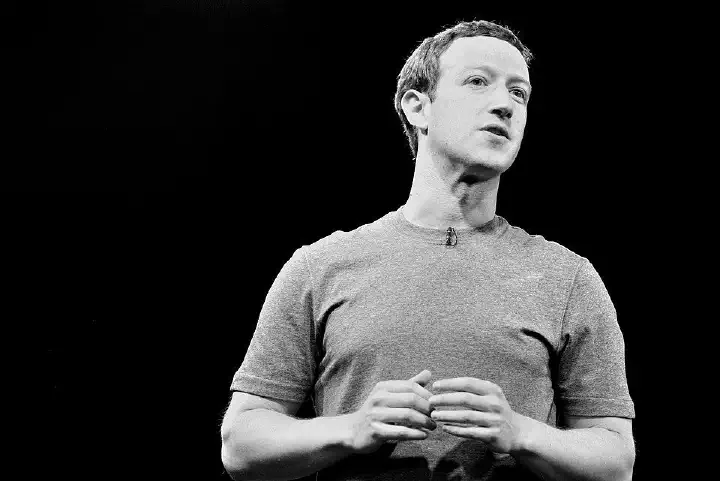
The meeting invite says it’s with Mark Zuckerberg. According to the Financial Times, that will soon be technically accurate.
Meta is reportedly building a photorealistic 3D version of its CEO, trained on his voice, his mannerisms, and his current thinking on company strategy. The plan, as reported, is that any of Meta’s 79,000 employees could interact with it. Ask questions. Get feedback. Receive direction. Zuckerberg himself is spending five to ten hours a week training it, personally.
The coverage has been predictable. Some call it visionary. A CEO who can be in every room at once. Others call it dystopian. A robot replacing the boss. The debate is well-worn, and it misses the more interesting question entirely.
The debate is about the tool. The tool is not the point.
Every conversation about the Zuckerberg clone lands eventually on what AI can and cannot do. Can it replicate his judgment? Can it carry his authority? Will employees trust it? Reasonable questions. But none of them are the interesting one.
When you train a system on your voice, your face, your thinking, and you send it into the room in your place, what did you send?
Not “what did the AI send.” What did you send.
Because you made a choice. You built something that would be there instead, and you spent five to ten hours a week making sure it sounded like you. That is a decision.
What the room receives is never just the message.
A senior leader I once worked with asked me why his team kept escalating small decisions to him, despite being told they had full authority to act. We looked at how he ran meetings. How he asked questions. How he responded when someone brought a problem. The words said: you are empowered. Everything else said: I will be the judge of whether you got it right.
He was not trying to say that. It travelled with him anyway.
This is what Zuckerberg’s experiment makes visible. We have always known, in the abstract, that presence communicates. That when a leader walks into a room, something arrives before they speak. We have always known that what the room receives is not just words. But it has been easy to treat that as soft, as something that applies to charisma or warmth but not to the harder machinery of leadership.
When the avatar appears on screen, what is in the room?
The words are. The strategy is. The mannerisms are. The leader accountable for what the room does next is not.
He will be there. Just not the version he thinks he is sending.
Zuckerberg is not opting out of the room. He is attending it, as the version of himself he has been able to prepare and control. A version with no surprises in it.
What will arrive with those 79,000 employees is not an absence. It is a presence, carefully assembled. And like every decision a leader makes about how to show up, it will communicate something beyond the words.
A Synthesia spokesperson, quoted in the Guardian coverage, explained the logic: “People work better when the information they need is delivered by a familiar face or voice.”
A familiar face. A familiar voice. Not a present one.
The assumption buried in that sentence is that what employees need from their leader is information, delivered efficiently, with a recognisable interface. That the friction of actual presence, the unpredictability of a real human in the room, is waste to be optimised away.
That assumption is not new. It has always been there, in every organisation that replaced a conversation with a memo, a meeting with a broadcast, a leader with a policy. Zuckerberg did not invent it. He is building it at scale.
So what actually travels when a leader sends something in their place?
A decision travels. The choice of what to be present for, and what to delegate. And a theory about what presence actually does for the people who receive it.
The clone is, in its own logic, generous. Zuckerberg is giving his employees something they would not otherwise have. What it raises is not whether he values his people. It is what he thinks presence actually does for them.
A CEO of 79,000 people cannot be in every room. That is not the argument. The choice of what kind of presence to offer is itself a statement. And the room will read it, whether it was meant as one or not.
What will travel, when that avatar appears on screen, is a Zuckerberg who has decided in advance how this conversation goes.
The room will notice.
—
What version of yourself do you send when you can’t be in the room?