
He couldn't say it. He said it anyway.
The leaders who land messages under constraint don't say less. They design more precisely.
King Charles III is not allowed to have political opinions. Not publicly. As a constitutional monarch, he cannot advocate policy, take sides, or speak plainly about where he thinks the world should be heading. It is one of the more unusual forms of leadership constraint there is: being heard by millions while being prohibited from saying what you actually think.
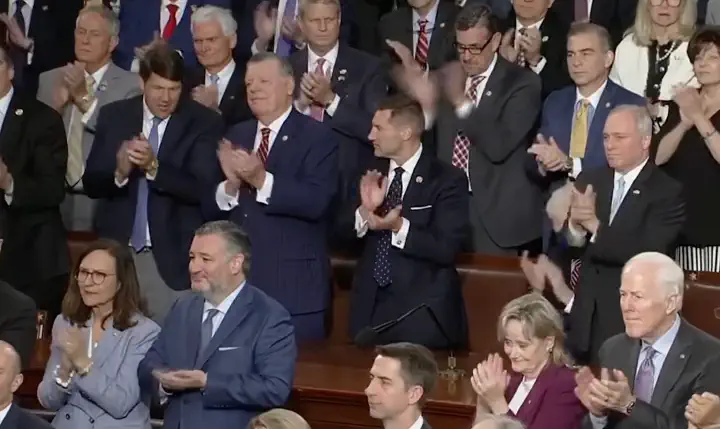
Last month he addressed a joint session of Congress, only the second British monarch ever to do so. He spoke for thirty minutes. He could not say a word in support of Ukraine, could not name NATO as something worth defending, could not suggest that America’s withdrawal from global leadership carried consequences. The rules are absolute. A head of state, on someone else’s soil, with a constitution watching.
By the end, the chamber had risen to its feet around a dozen times, from both sides of the aisle, on precisely those positions.
He had not stated a single one of them explicitly.
The instinct that empties the room
Most leaders have a version of this problem. Not at the scale of Congress, but structurally identical.
There is a decision that cannot be announced yet. A shift in direction the board is not aligned on. A message about performance that cannot be framed as an accusation. A strategic change that, stated directly, would trigger the wrong conversation at the wrong time.
The instinct, in all of these cases, is the same: go vague. Say less. Keep the message soft enough that no one can hold it against you.
And this is where the message disappears.
Constraint does not empty a room. Vagueness does. In a room that is already reading you, silence and ambiguity are messages. They just are not the ones you intended. Your team notices the shape of what you did not say. The board reads between lines you never meant to write. You end up with the worst outcome: you did not say the hard thing, and something else landed in its place.
When your only tool is selection
King Charles III had no executive authority in the room. No coercive lever. He was constitutionally prohibited from advocating positions. His only tool was the selection of what to say and how to say it.
He chose Lincoln. He chose history. He used the frame of a shared democratic inheritance, the specific memory of sacrifice, the logic of a decades-long partnership, to make an implication unavoidable without ever stating it. Ukraine and NATO were never mentioned. The room heard them anyway.
This is not oratory. It is architecture.
He knew what the message needed to create. He mapped how that room, at that moment, would interpret what he said. He designed the sequence and selected the exact point of arrival. Every word a considered choice. Not because constraint made it easier, but because constraint is the condition under which this discipline becomes visible.
When you can say it directly, you often do not have to design it at all. You just say it. When you cannot, you have to think about what the message must create, not just what you want to say. You have to decide what frame makes the implication inevitable. You have to know where the room is already and how far you can move it without a single explicit ask.
This is where leadership communication sits closest to diplomacy. Every lever except the direct one.
Not evasion. Selection.
The obvious objection: oblique communication reads as evasion. Leaders who imply rather than state make their teams anxious. The room notices when someone is not being straight with them.
This is true. But it is not what happened in that chamber.
There is a difference between designing a message precisely within constraint, and being evasive. King Charles III was not evading. He was selecting. The room felt the precision, which is why it responded as it did. Evasion feels uncertain, like someone who has not decided what they want. Precision under constraint feels exactly the opposite: deliberate, weighty, controlled. The distinction is whether the design is deliberate or accidental. The room always knows.
But there is a sharper objection: King Charles III had speechwriters. A team whose job was to construct every phrase. So is this article just saying get better comms support?
No. And this is precisely the point.
A comms team can help you build the architecture. They cannot own the constraint. They cannot know, with the precision required, what the message needs to create in that room, what is at stake if it lands differently, what ten people in that organisation will do with any given phrase when it travels beyond the moment. That understanding belongs to the leader. The speechwriter can draft. The leader must own the gap. That is not a comms function. It is a leadership one.
What this asks of you
Not the constitutional constraint of a head of state. Your constraint is organisational, political, tied to timing or to what the people around you can hear right now.
The question is not whether it is real. It almost always is.
The question is what you do with it. When you cannot go direct, do you go vague and hand the interpretation to the room? Or do you design more deliberately, precisely because the room cannot hear the explicit version?
The leaders who land messages in those moments are not more eloquent. They are more responsible about closing the gap between what they intend and what will land.
They do not use constraint as a reason to say less out of prudence.
They use it as a reason to say everything else with specific intent.
Where in your leadership are you defaulting to vagueness because saying it plainly feels too exposed?